
Why unverified alarms cost you money
Most alarm activations on Kenyan commercial sites are not break-ins. Wind, pets, faulty contacts and human error trigger the majority of signals, yet every one of them still consumes a response vehicle, fuel and officer hours.
When the same site generates repeated false activations, response teams naturally deprioritise it — and the one genuine intrusion arrives with a slower reaction than it deserves.
How verification changes the equation
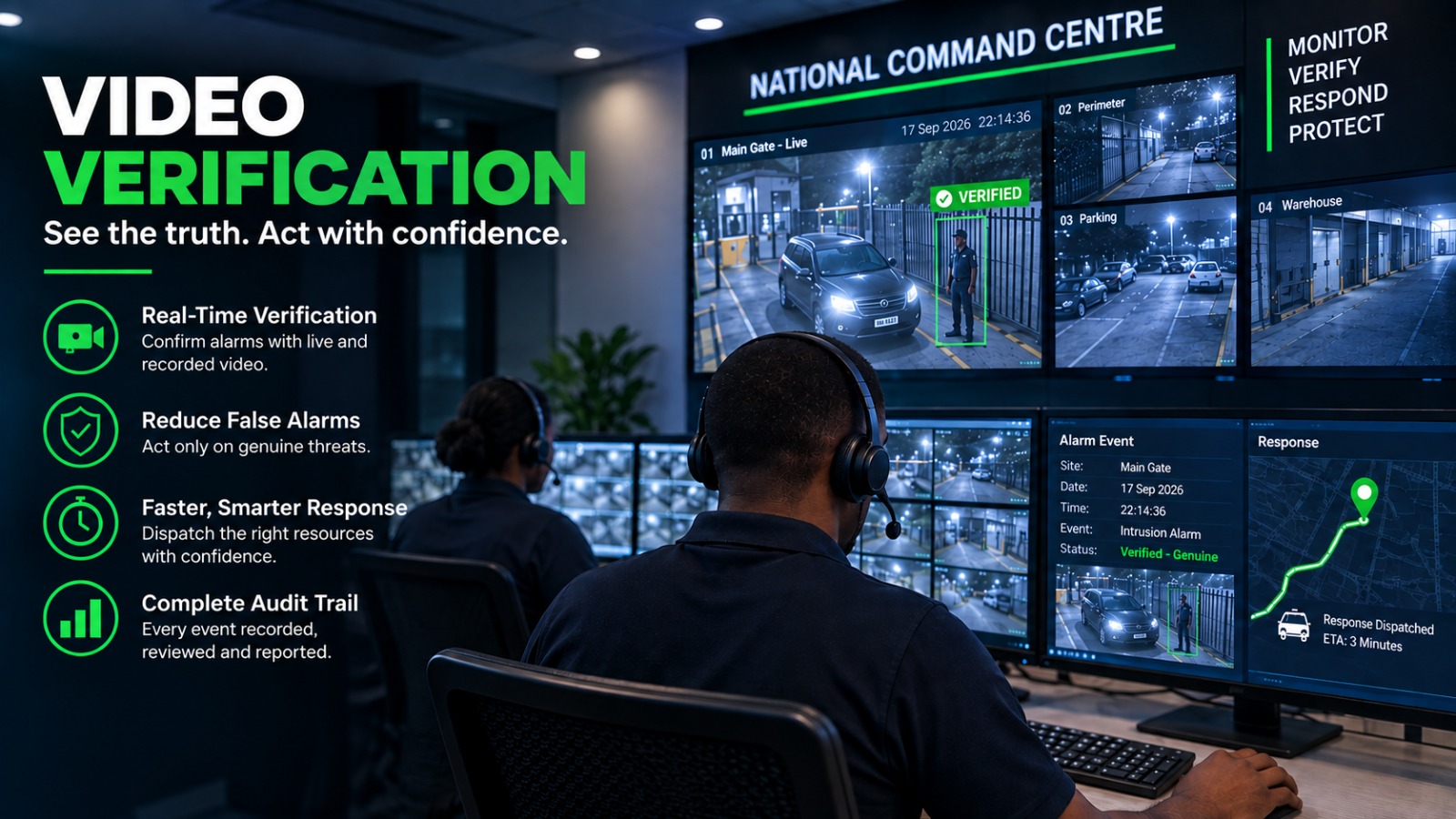
With Sealmark SentinelGrid™, an activation instantly pulls associated camera views into the National Command Centre. A trained operator confirms what is actually happening before a Mobile Response Unit is dispatched.
- Only confirmed events consume response capacity
- Operators brief officers with a live description of the threat
- Police liaison is faster because the incident is evidenced
- Every dispatch is logged with GPS timelines and video evidence
What to measure after switching
- False dispatch rate per site, per month
- Average verified-to-on-scene response time
- Cost per genuine incident resolved
- Percentage of incidents with usable video evidence